

Unemployment in the United Kingdom dropped to a pre-crisis low of 5.4% in the three months ending August 2014, according to the Office for National Statistics (ONS), compared to 6% for the same period in 2014. It was the lowest level since Q2 2008.
There were 1.77 million jobless people (not in work but seeking and available to work), which was 79,000 fewer than for the three month period ending in May 2015, and 198,000 fewer than 2014.
There were 970,000 unemployed men and 803,000 unemployed women, which was 125,000 and 73,000 fewer respectively than for a year earlier.
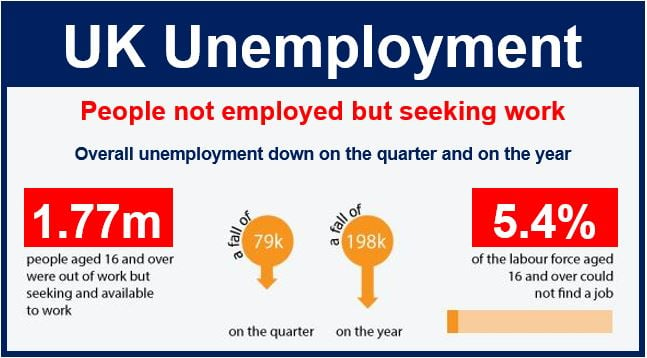 When the unemployment rate falls to close to 5%, the pressure on wages starts to increase significantly. (Data Source: ONS)
Record employment rate
For June to August this year, 73.6% of British people aged from 16 to 64 were in work, the highest employment rate since 1971 (when records began).
There were 9.01 million economically inactive people aged from 16 to 64 years. Economically inactive means the person does not work and is not seeking or available for work. The figure was similar to the previous three-month period, and 13,000 down compared to one year ago.
Compared to the previous year, pay for British workers during the June to August period rose by 3% including bonuses, and by 2.8% excluding bonuses.
Increasing pay is one factor the Bank of England (BoE) uses when determining whether to start raising interest rates. Pay hikes are still weaker than before the global financial crisis, but have started to gather pace sooner than the BoE had predicted earlier this year.
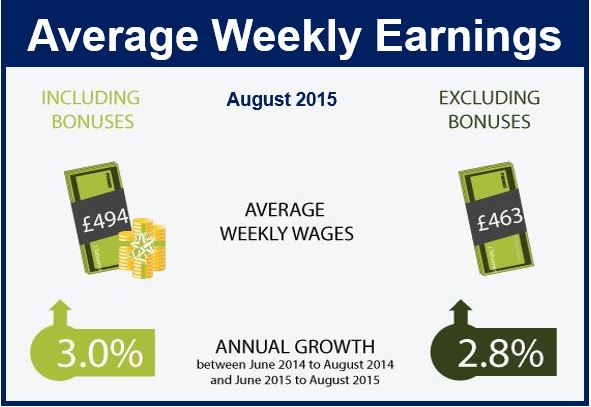 Earnings are starting to rise more rapidly. (Data Source: ONS)
Inflation moves into negative territory
The Consumer Prices Index (inflation) fell by -0.1% in the year to September, the ONS reported earlier this week, compared to 0% in the year to August.
Clothing prices rose by less than they normally would, while motor fuel prices declined considerably.
The United Kingdom’s inflation rate has been either at 0% or very close to it for most of this year.
