
A €350 billion investment plan to kick-start the Eurozone’s economy and create jobs was announced by the European Commission on Wednesday. Most of the money will come from private new investment.
The Commission says the investment would benefit the environment, the digital economy, transport and education.
Critics say the scheme is far too small and needs more real, hard cash if it is to have any noticeable effect.
The Investment Plan is built on three main strands:
European Fund for Strategic Investments: this new investment is guaranteed with public money, and aims to mobilize at least €350 billion of extra investment from 2015 to 2017.
A credible project pipeline: alongside an assistance program to direct investments to where they are most needed.
An ambitious roadmap: aimed at making the Eurozone more appealing for investors. It will involve removing regulatory bottlenecks.
According to the European Commission, there is a serious investment gap in the region.
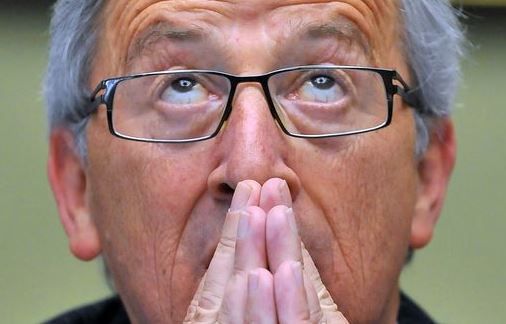
Mr. Juncker must now pray that for every €1 the EU puts in, private investors will add another €15.
Investment in the European Union (EU) has declined by over €430 billion since its peak in 2007. EU investment levels are between €270 billion to €340 billion below their historical norms.
Poor investment undermines short-term recovery and damages long-term growth.
Commission President Jean-Claude Juncker said the Investment Plan is the third leg of a strategy to get the more than 10 million unemployed Europeans back to work.
Mr. Juncker said:
“Europe needs a kick-start and today the Commission is applying the jump leads.”
Too little money in the fund
Many economists are saying the plan will have virtually no impact on Europe’s anemic economy. The EU is only investing €8 billion and the European Investment Bank €5 billion to help fund a €21 billion special capital investment fund. They hope the rest of the money will come from the private sector.
Most European lawmakers cautiously welcomed the move, but said the capital investment fund should have been considerably higher.
The Greens, plus the far left and right parties, however, said it was wishful thinking to expect a times-15 leverage effect.
Dimitris Papadimoulis, of the European United Left, said “This package is just empty words. There is not one euro of fresh money in there.”
In response to lawmakers who accused Mr. Juncker of simply recycling old money, he responded by saying it was more a case of putting funds to better use. He believes that increasing debt would be harmful.
Mr. Juncker said:
“We don’t have a money-printing machine. We need to attract money to make it work for us.”
Private investors in Europe are full of cash, but they are reluctant to commit their money, Mr. Juncker explained. Encouraging them to use their funds is the solution to the investment trap, he added.
Mr. Juncker added:
“I have a vision of school children in Thessaloniki walking into a brand new classroom, decked out with computers. I have a vision of a hospital in Florence saving lives with state-of-the-art medical equipment. I have a vision of a French commuter being able to charge his electric car along the motorway in the same way we fill up on petrol today.”
There was no mention of the Eurozone’s stagflation and how this would be addressed, which many critics say is a sign that he should be spending more time with central bankers.
Video – The EU Investment Plan
In this European Commission video, Vice-President Jyrki Katainen explains the EU investment plan.
