
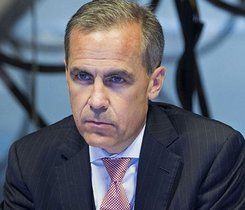
UK economic stability will be put at risk if it leaves the EU , according to recent comments made by BoE Governor Mark Carney.
Carney said that a vote to leave the EU would test “the kindness of strangers” who fund the UK’s hefty current account deficit with the rest of the world.
He said that a Brexit could add a ** ‘risk premium’ to the country because of the size of its deficit – currently at 3.7% of gross domestic product.
** Risk premium is the difference in the expected return between a high-risk investment and a risk-free one (government bonds).
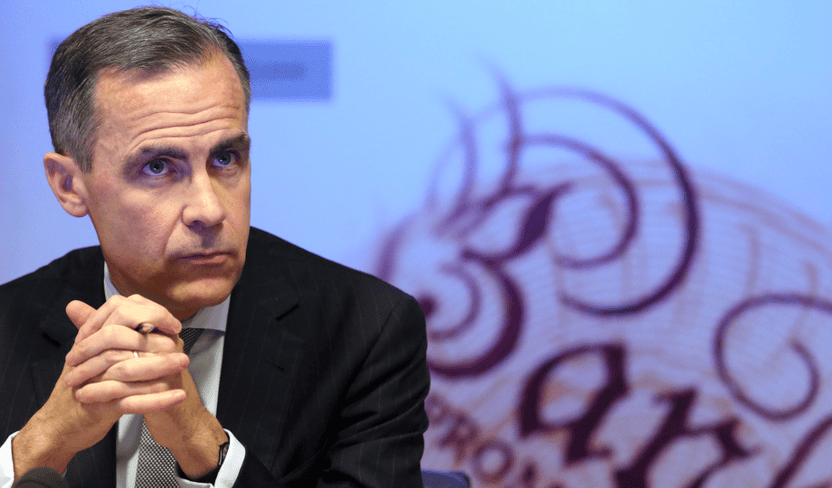
“The global general environment has become much more febrile, much more volatile, and relying on the kindness of strangers is not optimal in that kind of environment, and that’s what is the case when you’re running a 4, 4-1/2 percent (of GDP) current account deficit,” Carney told lawmakers.
“And secondly, the possibility of a risk premium being attached to UK assets, because of certain developments, exists and that plays into the riskiness of the situation.”
Risk premia attached to UK assets would mean that households, companies, and the British government would have to pay higher interest rates on money borrowed from abroad.
The comments by Carney follow claims made by investment bank giants Goldman Sachs and JP Morgan that the UK will have a better economic future staying in the EU.
A vote in favour of Brexit could break up the UK
Tony Blair, the former prime minister, said on Monday that leaving the EU could end up breaking the country. Blair said that if there is a ‘Brexit’ then Scotland would likely vote to leave the UK in a referendum.
This follows comments made by Scottish First Minister Nicola Sturgeon that if the UK leaves the EU there would be “overwhelming demand” in Scotland for another independence referendum.
Renegotiation is not “number one on the European agenda.”
Prime Minister David Cameron is currently renegotiating Britain’s relationship with the EU ahead of the vote which he pledged would take place by the end of 2017 – it looks like he wants to get it over with as early as this June. One of the main proposals is to restrict EU migrants’ access to benefits for four years.
However, Britain’s foreign minister, Philip Hammond, said on Tuesday that renegotiation is not “number one on the European agenda.”
Addressing the Lords EU Select Committee, Mr Hammond said: “We have to recognise the fact the European Union has got a couple of other issues on its plate and although the British renegotiation is number one our European agenda I’m afraid it isn’t number one on the European agenda of any of our partners, except perhaps for the Irish.”
He added: “Unfortunately some of the other things are very much real-time challenges for the EU whereas this agenda is one which can be dealt with in slightly slower time.
“I think it would be inappropriate of us, and it would also be unwise of us, to try and push our agenda ahead of other things which the other EU member states will see as being pressingly urgent to discuss at the summit,”
Hammond said that if a deal was made “it will be possible to hold a referendum in June, if we chose to do so”.
“If the deal is not done in February that would become much more difficult. Certainly, if it’s not done in March it would become impossible”.
