
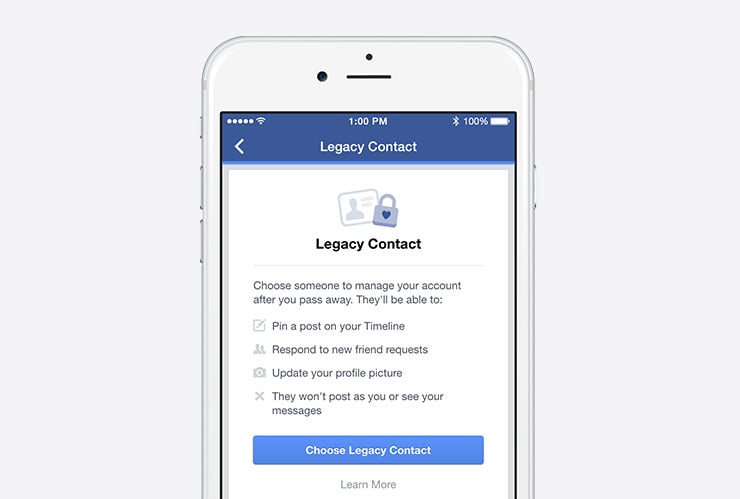
Facebook has implemented a new feature that allows its users to decide what will happen to their accounts when they pass away.
A new option has been added to the site’s security settings that gives users the option of either having their Facebook account deleted when they die or assigning it to an heir who will inherit take control of the account.
The company has been trying to tackle this problem for years now, it first added a feature that turned deceased users profiles into memorial pages, but it has wanted to give its users more options about what will happen to their account when pass away.
As of today, in the US only, people have a chance to choose a “legacy contact”, such as a close family member or friend, who will be able to post messages and announcements on the account’s timeline and essentially manage it.
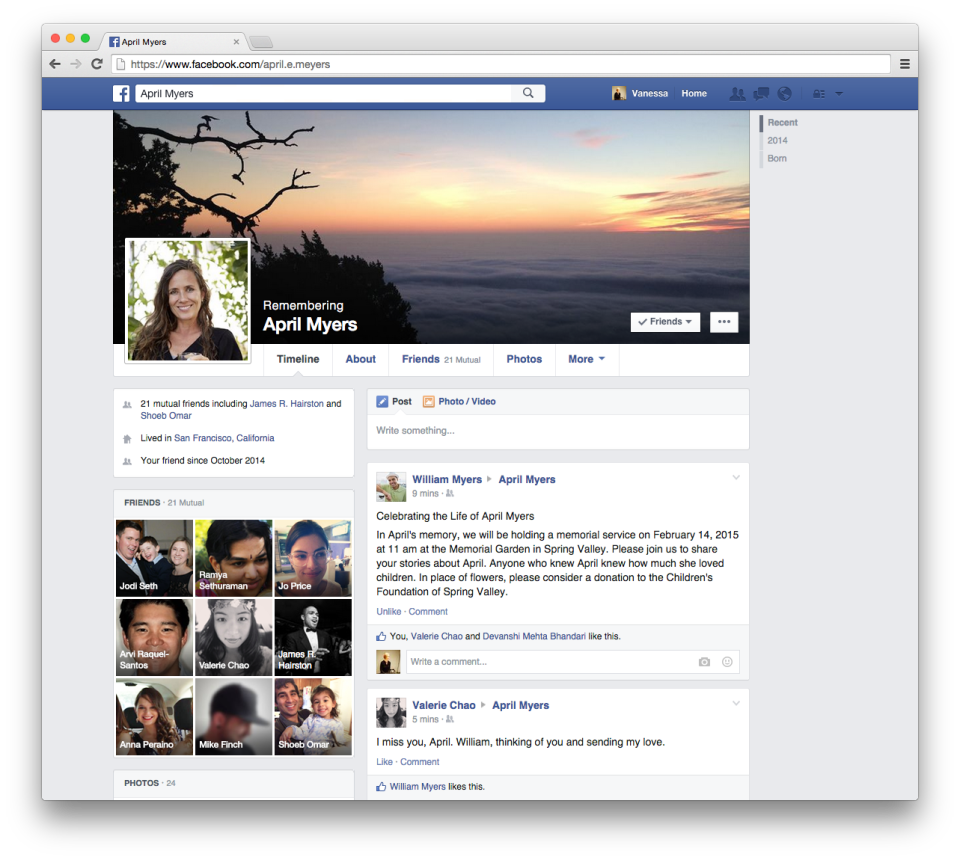
Screenshot of a Facebook memorial profile. Source: “Adding a Legacy Contact” – Facebook Newsroom.
Facebook says that users can may give their legacy contact “permission to download an archive of the posts, photos and profile info”.
The social media giant also redesigned memorial profiles by adding “Remembering” above the deceased’s name – as seen in the screenshot above.
“If someone chooses, they may give their legacy contact permission to download an archive of the photos, posts and profile information they shared on Facebook. Other settings will remain the same as before the account was memorialized,” a blog post from Facebook’s product team said.
“Until now, when someone passed away, we offered a basic memorialized account which was viewable, but could not be managed by anyone,” the Facebook team said. “By talking to people who have experienced loss, we realized there is more we can do to support those who are grieving and those who want a say in what happens to their account after death.”
The feature is going to only be rolled out users in the U.S. residents first, but Facebook will soon expand it to other countries.
