
Aramco Headquarters in Dhahran, Saudi Arabia

Saudi Arabia considering IPO of state owned oil giant ‘Aramco’

Written by Joseph Nordqvist

Published: 01:41, January 9, 2016

Saudi Arabia is considering to go ahead with an initial public offering (IPO) of its state-owned giant oil company, Saudi Arabian Oil Co., or Aramco.

On Friday the company said that it was exploring options “to allow broad public participation in its equity,” including an IPO of the group or some of its subsidiaries.

According to Jason Tuvey, an economist at Capital Economics, the company could be valued anywhere between $1 trillion to $10 trillion – making it the most valuable company in the world.

Aramco pumps around 12% of the world’s crude oil and has both the world’s largest proven crude oil reserves, at more than 260 billion barrels (4.1×10¹⁰ m3), and boasts the largest daily oil production.
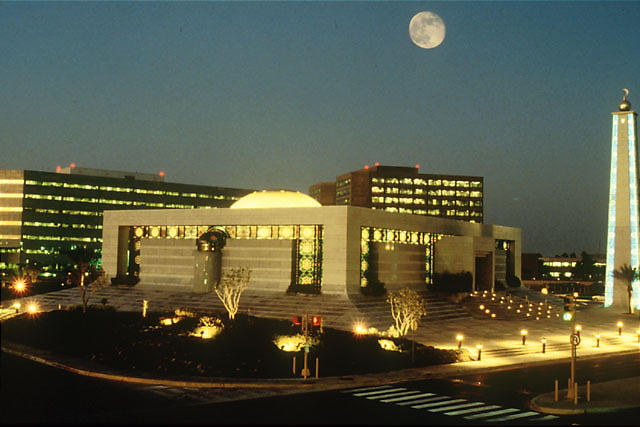
Aramco Headquarters in Dhahran, Saudi Arabia

Aramco headquarters in Dhahran, Saudi Arabia.

Oil accounts for approximately 75% of Saudi Arabia’s revenue and the country has taken a huge hit amid plunging prices of the commodity.

Luay al-Khatteeb, energy security expert and a fellow at the Brookings Doha Center, was quoted by CNN as saying:

“Saudi Arabia is experiencing uncontrollable and unsustainable spending on defense and subsidies… they are desperate to raise cash,”

As for who is likely going to win the Aramco IPO, a Bloomberg report said (citing people familiar with the matter ) that “JPMorgan Chase & Co. and HSBC Holdings Plc are among international lenders in the best position to win a role if the kingdom goes ahead with an IPO of Saudi Arabian Oil Co., or Aramco,”

JPMorgan and HSBC helped arrange a $10 billion loan for the company last year, giving them a significant advantage over other investment banks that do not have as much experience or presence in the region.

The oil giant, based in Dhahran, was founded in the 1930s as the Arabian American Oil Company. In the 1970s the company became fully state-owned. It currently operates the Ghawar Field, the world’s largest onshore oil field, and the Safaniya Field, the world’s largest offshore oil field.

Joseph Nordqvist Avatar

Other News

IMF says global current-account gaps widened in 2025, led by China and the United States

Sep 14, 2026

Alan Lovell takes over as British Steel chair as government pursues turnaround

Sep 14, 2026

Plumbing or college: weighing pay, training and AI exposure

Sep 13, 2026

Why more advanced VR equipment does not always feel more real

Sep 13, 2026

VR pilot training shows promise before a student’s first real flight

Sep 13, 2026

Family businesses face a gap between succession plans and readiness

Sep 13, 2026

EU keeps battery recycling targets as industry prepares for tougher recovery rules

Sep 13, 2026

UK firms report patchy recovery while hiring plans stay flat

Sep 13, 2026

Positron wins new backing for an AI chip built around cheaper memory

Sep 13, 2026

EU employment rises, but 24 million people still want more work

Sep 13, 2026

Why the Internet of Things still matters for businesses

Sep 12, 2026

Deep discounts can weaken later purchase interest, study finds

Sep 12, 2026

Household saving study finds large differences in how people value the future

Sep 12, 2026

Cybersecurity budget research puts expected losses ahead of spending targets

Sep 12, 2026

UK trade deficit narrows to £9 billion over three months

Sep 12, 2026

Munters expands Virginia factory to make data center chillers locally

Sep 12, 2026

Digital literacy report calls for skills training beyond network coverage

Sep 12, 2026

Berkeley’s healthy checkout rule linked to lower soda sales, study finds

Sep 12, 2026

France cuts growth forecast to 0.5% and announces fresh budget measures

Sep 12, 2026

Kroger cuts sales outlook as online growth helps support earnings

Sep 12, 2026