
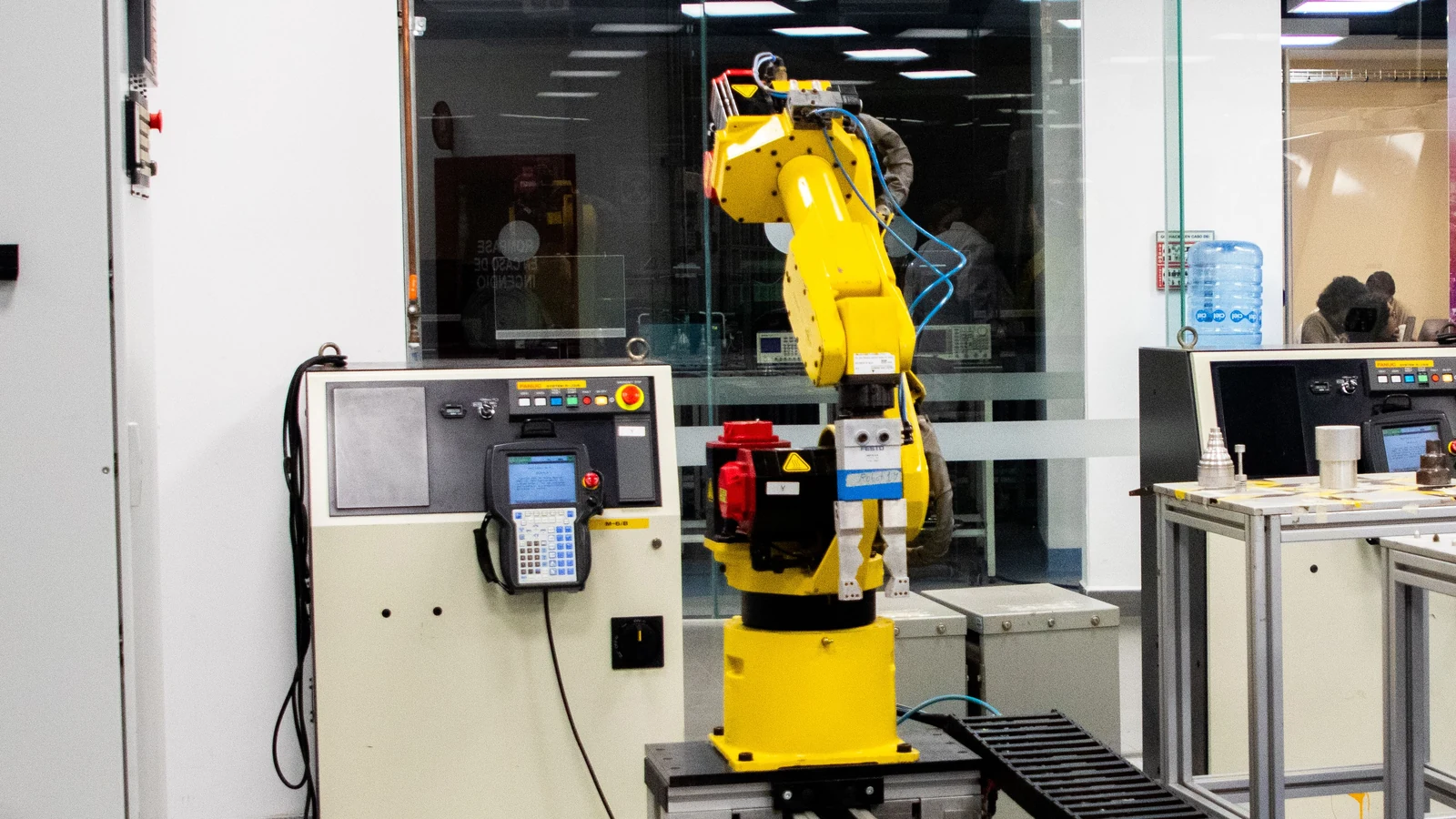
Italian companies that learned how widely their competitors used robotics became more likely to say they planned to adopt the technology, according to an experiment embedded in a survey of around 3,000 firms.
The information did not produce a statistically significant change in firms’ stated plans to adopt artificial intelligence, the researchers found. The results concern intentions, not completed purchases or installations.
The National Bureau of Economic Research working paper, circulated in December 2025, examines how knowledge of competitors can influence a company’s technology decisions. Working papers are preliminary research and may change before peer review.
For managers weighing automation, the study suggests that estimates of what rivals are doing can influence plans even before a firm has assessed whether a particular machine would pay for itself.
What firms learned about their competitors
Zoë B. Cullen, Ester Faia, Elisa Guglielminetti, Ricardo Perez-Truglia and Concetta Rondinelli placed their experiment in the Bank of Italy’s 2025 Survey of Industrial and Service Firms.
They asked companies to estimate how many similar firms in their sector and size group had adopted robotics and AI. A randomly selected half received information on actual adoption among those comparable businesses.
Many respondents underestimated their peers’ use of the technologies. After receiving the information, firms revised their expectations about how widely competitors would use the technologies by 2027.
Random assignment matters because it allows the researchers to compare firms given the information with others in the survey that were not, rather than relying only on differences between businesses that had already chosen to adopt a technology.
Robot plans rose, but AI plans did not show a clear effect
In the working paper’s reported estimates, information about peers raised intended adoption of robotics by 6.7 percentage points, from 37.6% in the control group to 44.3% in the comparison. That is a difference between stated intentions, not a count of new robots purchased.
The estimated effects on plans for predictive and generative AI were not statistically significant. The authors caution that their estimates are imprecise and do not rule out smaller positive effects.
They offer possible explanations, including that firms were already more likely to expect AI adoption and that robotics was a more established technology in the sectors studied. Those explanations are hypotheses, not separate findings established by the experiment.
The team says firms’ own investment choices may depend on what they expect competitors to do. A company might see a rival’s adoption as evidence that a technology works, fear losing a competitive advantage, or respond for a combination of reasons.
Plans are not the same as returns
The survey captured an immediate change in responses after managers received information. It did not establish that firms later installed robots, reduced costs or earned higher profits.
The authors note that following the same companies in later surveys and administrative records could help determine whether stated intentions translate into actual behavior.
That uncertainty matters when applying the findings to a purchase. A competitor’s equipment may be suited to a different production volume, workforce or product. A machine that works well elsewhere may be expensive to integrate into another operation.
Managers evaluating a project can estimate acquisition, installation, maintenance and training costs alongside expected changes in output, quality and downtime. Return on investment is one way to compare expected gains with costs, although estimates remain dependent on the assumptions used.
Why information can change a decision
Knowing that similar businesses have adopted a technology may prompt managers to investigate options they had not previously considered. It can also create pressure to act before a firm has established whether the investment fits its own needs.
The Italian experiment supports the first part of that chain for stated robotics plans. Its next question is whether the companies that revised their intentions ultimately made investments and what those investments achieved.

