
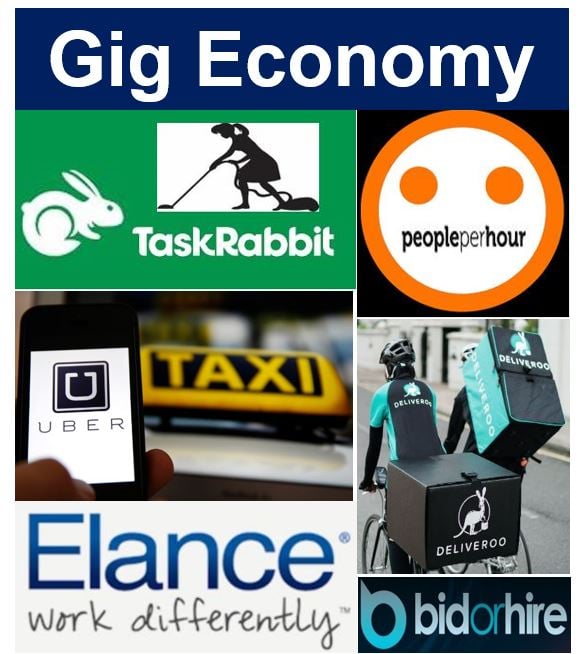
A government review on modern working practices has been released, providing recommendations on how to go about handling Britain’s changing labour conditions amid a rising gig-economy.
Prime Minister Theresa May urged the government to take the recommendations outlined in the report seriously.
The report, by former aide to Tony Blair, Matthew Taylor, emphasised the importance of workplace flexibility and its contribution to the country’s record high employment. The UK is currently enjoying its highest rate of employment lowest level of unemployment since 1975. The employment rates is now at 74.8%, while the unemployment rate has dropped to a more than forty-year low of 4.7%.
The review quoted the following CBI submission: “The UK is widely recognised as having one of the most flexible labour markets in the world. The UK is rated as having the 5th most efficient labour market in the World Economic Forum’s Global Competitiveness Report 2016-17, behind only Switzerland, Singapore, Hong Kong and the United States.
“Flexible labour markets tend to enjoy higher employment rates and lower unemployment than those with more rigid approaches and – as CBI research from 2014 shows – over many decades, they have better protected the labour share and delivered more real terms wage growth than more rigid systems. This is why flexibility matters.”
“Flexible labour markets tend to enjoy higher employment rates and lower unemployment than those with more rigid approaches,” the report said.
The report recommends that the government:
- Classify those working for platform-based companies, such as Uber, as dependent contractors who should be paid at least the minimum wage during times of normal or high demand.
- Implement strategies so that workers do not get stuck on the National Living Wage.
- Avoid making further increases to the non-wage cost of employing workers.
Mr Taylor was quoted by the BBC as saying that the gig economy has given some employers too much power. “Of all the issues that were raised with us as we went around the country, the one that came through most strongly was what the report calls one-sided flexibility.
“One-sided flexibility is where employers seek to transfer all risk onto the shoulder of workers in ways that make people more insecure and makes their lives harder to manage. It’s the people told to be ready for work or travelling to work, only to be told none is available.”
Director general of the British Chambers of Commerce Dr Adam Marshall said: “Matthew Taylor has rightly recognised that the UK’s flexible labour market is a great source of strength and competitive advantage, but has also recommended some common-sense changes where grey areas have emerged in recent years.”
The review did not call for a ban on zero-hour contracts, something that both unions and the Labour party have been pushing for. Approximately 2.8% of people working in the UK are on zero-hours contracts, according to official data.
TUC general secretary Frances O’Grady, said: “Workers deserve the minimum wage for every minute they work, not just the time employers choose to pay them for.
She added: “It’s no secret that we wanted this review to be bolder. This is not the game-changer needed to end insecurity at work.”
