
The UK’s economic success comes at a price, as far as the European Union is concerned. Britain has been told by the EU that it must pay an additional €2.1 billion (£1.7 billion) because its economy has performed so well.
France’s economic disaster is being rewarded with a €1 billion rebate.
British lawmakers, much of the local media and the majority of Brits are furious at what they see as an upside-down policy that rewards failure and punishes success.
A source from Downing Street said “It’s not acceptable to just change the fees for previous years and demand them back at a moment’s notice. The European commission was not expecting this money and does not need this money and we will work with other countries similarly affected to do all we can to challenge this.”
Spokesman for the EU budget commissioner, Patrizio Fiorilli, said “The timing is far from ideal. But there are rules we have to follow.”

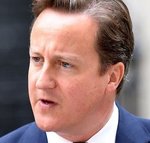
This is a golden opportunity for Prime Minister David Cameron to show the British public that he won’t be bullied by Brussels.
The EU’s demand will raise the UK’s annual net contribution of £8.6 billion by about one-fifth. The European Commission has given the UK until December 1st to pay up.
Several Conservative lawmakers are saying that the UK should simply say “No!” and refuse to pay up.
This is one of the extremely rare events that sparks a unanimous cross-party reaction. Nigel Farage, leader of the anti-EU UKIP party said Britain again is being “hammered”. The Labour party urges the European Commission to take another look at the “backdated bill”.
In an interview with the Guardian, Mr. Farage said
“Having come to Britain to set fire to David Cameron’s migration ideas, José Manuel Barroso [European commission president] has returned to Brussels to pour more fuel on the flames. This is the EU making clear that economic success is not to be applauded but to be punished. Mr Cameron has to veto this if he is to have any credibility at all.”
For a European Union seemingly desperate to keep Britain in the EU after the referendum in 2017 which will decide whether or not to leave, the EU has made a huge mistake, most UK newspapers are saying today.
James Kirkup wrote in the Telegraph that the £1.7 billion demand is probably the best-ever gift to those in the country that want the UK to leave the EU.
There is already a growing feeling among the British public that EU and UK priorities diverging. To be told that failure is rewarded and success punished goes against virtually every Brit’s fundamental values. The message across the country will simply be that the European Commission lives in a different universe.
The following countries have to pay more (Source: BBC): UK (£1,676m), Netherlands (£506m), Italy (£268m), Greece (£70m), and Cyprus (£33m).
The gainers (countries receiving rebates) are: France (£801m), Germany (£614m), Denmark (£253m), Poland (£249m), and Austria (£232m).
A lifeline or noose for Mr. Cameron?
The European Commission may have thrown a lifeline to Prime Minister David Cameron, who is desperate to show the electorate that he can stand up to Brussels.
It is a fantastic opportunity for him to dig in his heels and respond with a “Non, non, non!”
However, if he does not play his cards right, it could easily turn into a noose. Some political analysts say the lifeline has come too late and that a flat refusal could damage his referendum plans (Cameron wants the UK to stay in the EU).
If Mr. Cameron balks or buckles under EU pressure, his chances of winning next year’s general elections will go up in smoke.
