
Anthropic has unveiled a premium subscription tier for its Claude chatbot, taking a bigger swing at OpenAI with pricing that reaches as high as $200 a month. The new plan, called “Max”, is tailored for users who rely on Claude so heavily that the existing limits (caps on queries) were simply getting in the way of productivity.
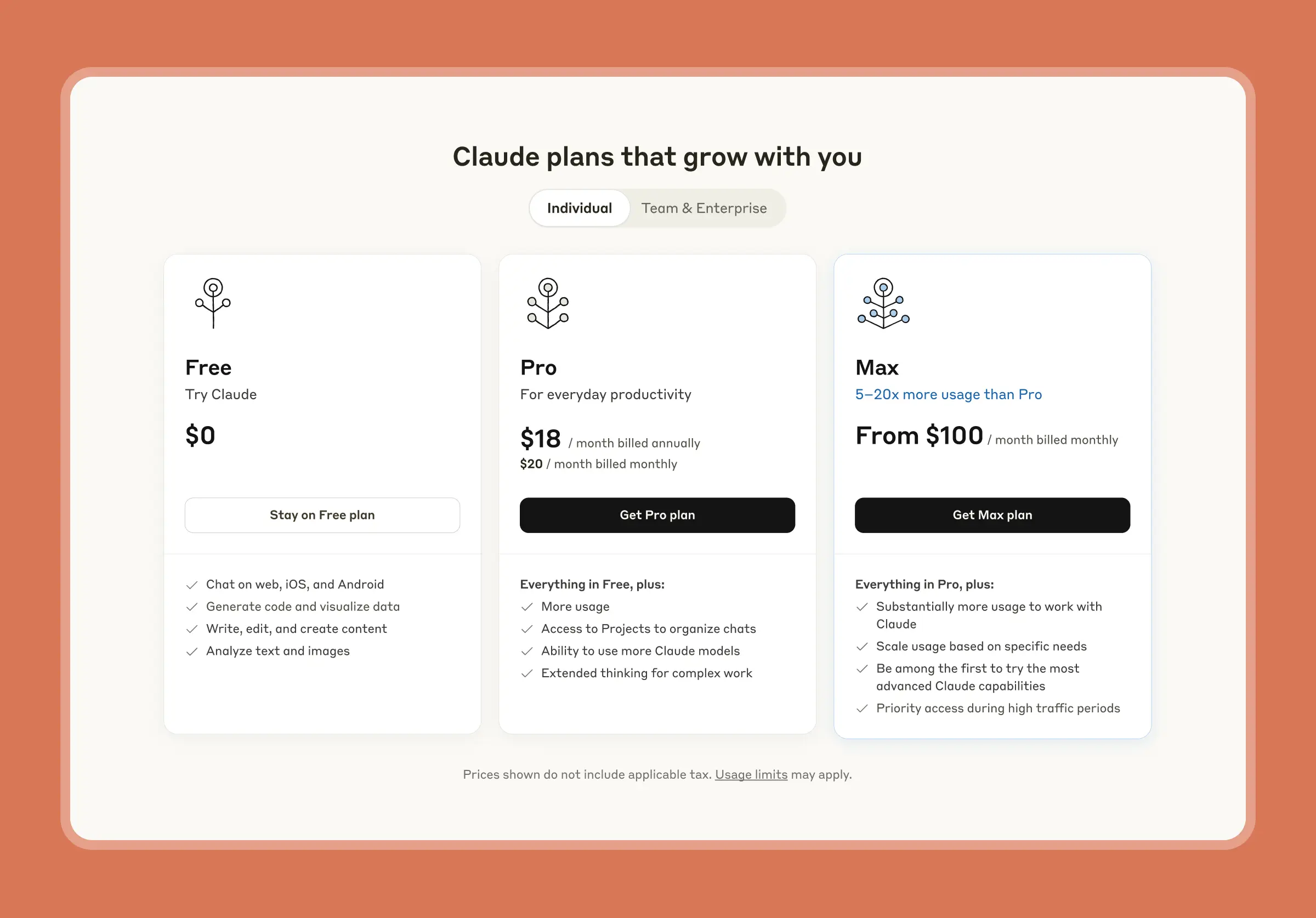
There are two Claude Max tiers: one at $100 a month for five times the usage of the Pro plan, and another at $200 offering 20 times the usage.
Pricing
- $100/month – 5× Pro usage
- $200/month – 20× Pro usage + priority access
Included Features
- Priority access during peak hours
- First access to voice mode and new tools
- Increased usage/output caps
Ideal For
- Media, tech, finance, and marketing pros
- AI power users working with large tasks
Anthropic Momentum
- $61.5B valuation (March 2025)
- $3.5B recent funding round
- Clients: Zoom, Pfizer, Snowflake
Put simply, that’s a lot of Claude, especially compared to the $20 basic tier most users start with. The structure here isn’t too different from OpenAI’s own $200 plan for ChatGPT, although Anthropic isn’t pushing the “unlimited” angle quite as hard. Instead, they’re leaning into priority access and expanded usage, particularly during peak hours, where paying customers will now be bumped to the front of the line.
According to a CNBC article, Scott White, a product lead at Anthropic, put it plainly: people have been asking for this. And apparently for a while. The company says it’s heard growing demand from professionals in media, finance, marketing, and tech who want more out of their AI tools: more back-and-forth, more file handling, more everything. They don’t want to stop mid-session because of message caps.
Beyond sheer volume, Claude Max subscribers will get first dibs on new features, including the upcoming voice mode. This is a soft power move. It signals that Anthropic is increasingly confident it can keep pace with OpenAI and maybe even jump ahead in some areas (although this remains to be certain).
If you’re wondering whether it’s worth it, that depends. The plan is clearly not meant for casual users who just want to brainstorm ideas or reword emails now and then. It’s pitched more at people who spend all day inside a Claude chat window. Think of those who need to handle big files, very complicated (almost research-level) questions, and tight deadlines.
The release also coincides with a broader uptick in Anthropic’s momentum. The company’s valuation hit $61.5 billion in March after closing a $3.5 billion funding round. Revenue has surged, and their client list includes giants like Zoom, Pfizer, and Snowflake.
So while the Max plan might sound steep, it’s another way the startup is attempting to monetize what has so far been an extremely viral, but costly, tool.
There’s an underlying message here, too: AI access is shifting. The days of limitless queries for a few bucks are fading fast. The tech is moving forward, but it’s also getting more expensive to develop, and that cost has to land somewhere.
Claude’s Max plan is available now across all supported regions. Whether it signals a new tiered future for consumer AI, or just an aggressive flex in the ongoing AI subscription wars, remains to be seen. Either way, the bar just got raised. And not just on usage limits. On price, on expectations, and maybe on what people are willing to pay for a chatbot that doesn’t get in the way (fewer limits).
