
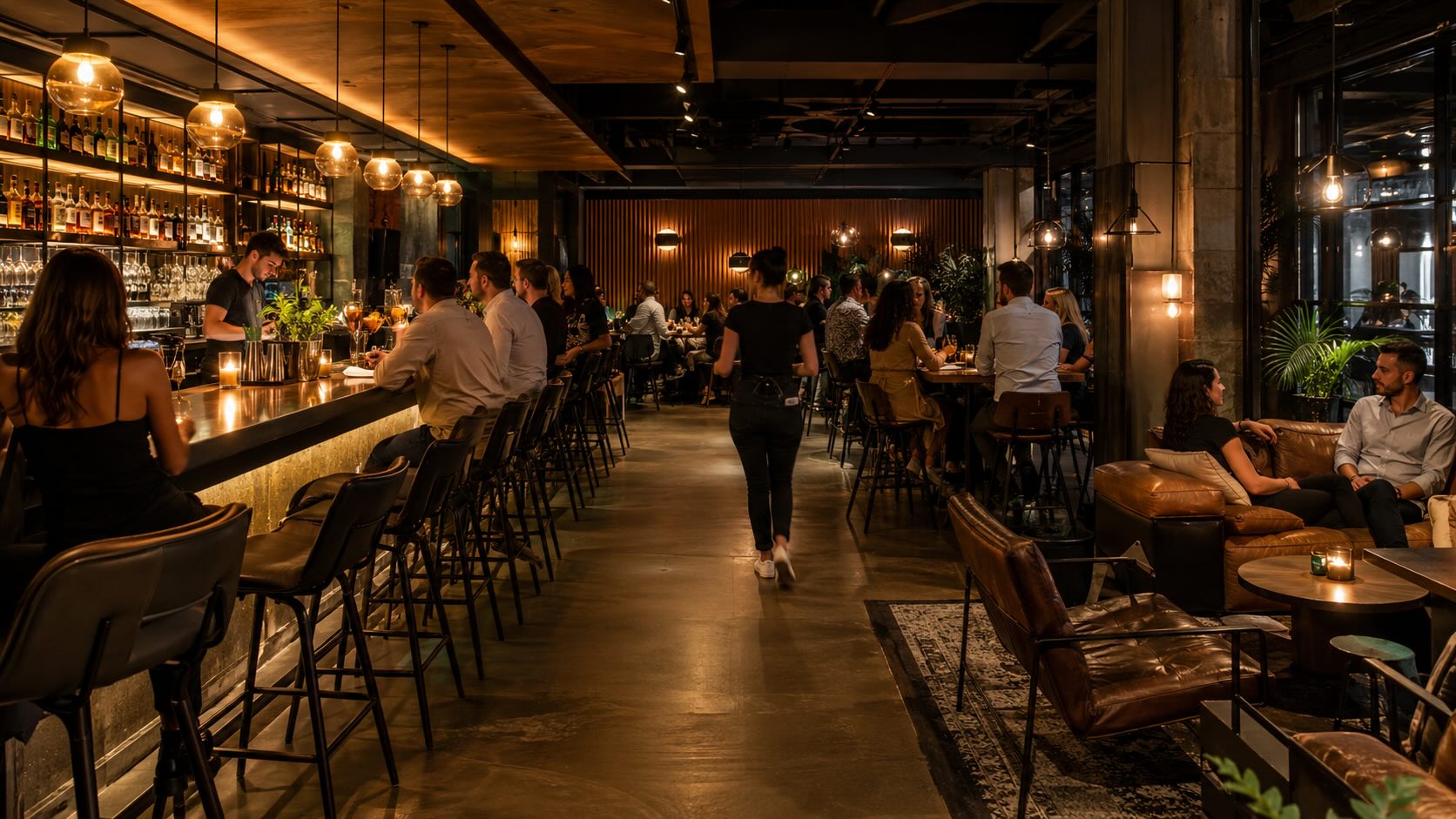
A good bar has a rhythm to it. You can usually feel it before you’ve thought about the details: the way people move through the room, where they choose to stand, how easily staff reach tables, whether the seating invites people to stay, and whether the whole space feels lively without becoming chaotic.
Furniture plays a much bigger part in that rhythm than it often gets credit for. A venue might have a great drinks list and strong branding, but if the seating feels awkward or the floor is hard to work, the experience starts to suffer. Choosing stylish bar furniture is about more than filling the room with attractive pieces; it’s about shaping how guests settle in and how the team keeps service moving when the venue is busy.
The best bar layouts leave room for movement
Bars need flow. People arrive in groups, move between the counter and their seats, gather near friends, stand longer than expected, and occasionally stop right in the path where staff need to pass. If the layout doesn’t allow for that natural movement, even a beautiful venue can feel cramped.
High tables can help create casual gathering spots, especially in areas where guests are likely to have one drink before moving on. Sofas and lounge chairs can soften quieter corners, while stools along the bar can make solo guests or smaller groups feel more comfortable. The trick is not to force one type of seating across the whole space, but to create different options that suit different moments.
Comfort affects how long people stay
No one expects bar seating to feel like a recliner, but it still needs to be comfortable enough for the kind of venue you’re running. A quick-service venue can use lighter, more compact furniture, while a cocktail bar, hotel bar or wine lounge usually needs seating that supports longer visits.
Seat height, back support, footrests and table proportions all matter. If the tables are too small for shared plates, guests start juggling glasses and napkins. If stools have nowhere for feet to rest, people get uncomfortable quickly. If lounge chairs sit too low beside the table, the space may look relaxed but feel impractical.
Good comfort doesn’t have to be obvious. Guests may never comment on it directly, but they’ll feel the difference.
Materials need to match the pace of the venue
Bar furniture works hard. It deals with spills, constant cleaning, dragged chairs, scuffed legs, crowded nights and plenty of accidental knocks. That means materials need to be chosen with daily use in mind, not just opening-night appearance.
Timber can bring warmth, metal can add durability, upholstered pieces can create softness, and easy-clean surfaces can make resets quicker. The right mix depends on the venue’s personality, but every piece should earn its place practically as well as visually.
Atmosphere comes from the whole setting
Furniture works alongside lighting, music, flooring, acoustics and the bar itself. A venue can feel intimate, energetic, refined or relaxed depending on how those elements come together.
Design for the night at full capacity
A bar’s real test isn’t how it looks empty in the afternoon. It’s how it feels when the room’s full, staff are moving quickly, and guests are deciding whether to stay for another round.
When the furniture supports atmosphere, comfort and flow at the same time, the venue feels better for everyone. It becomes easier to serve, easier to enjoy and much more likely to leave guests with the feeling that the night just worked.
