
Internet TV does not increase how long an individual spends watching television, but the experiences is more pleasurable than traditional broadcast TV, researchers from the University of Texas at Dallas reported in the Journal of Cultural Economics.
Study author, Dr. Stan Liebowitz, a managerial economics professor in the Naveen Jindal School of Management, said:
“Some media reports predict that because people now have access to watch anything they want, anytime they want, they will spend more time watching TV.”
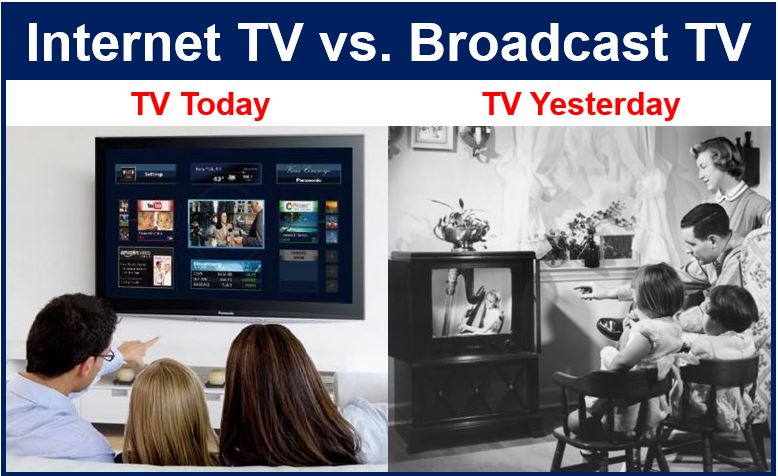
For their study, Alejandro Zentner and Dr. Liebowitz monitored people’s TV viewing hours during the switch from broadcast to cable TV. As comprehensive data regarding current trends in Internet TV viewing won’t be available for at least another decade, they prognosticated what’s going to happen based on what occurred in the past.
Viewing time not influenced by choice
According to the study, viewing time essentially did not change, regardless of how much choice there was. Dr. Liebowitz said there are only 24 hours in a day, so widening the choice does not mean people are going to spend longer watching television.
However, viewers are getting greater enjoyment with Internet TV, the study found.
Dr. Zentner, an associate professor of finance and managerial economics, said:
“Additional program choices imply that people will be more likely to find a television show that more closely matches their taste. Because the Internet has brought about additional program choices, viewers get greater enjoyment.”
Given that Internet TV viewers do not spend more time watching television, the researchers said that on-demand Internet streaming media firms should not expect to earn more money through increased viewing.
The focus for companies should be on subscription revenue rather than advertising revenue, Dr. Liebowitz said. Netflix has done the right thing in this sense, while Hulu initially concentrated on advertising revenue.

What about Internet TV and binge watching?
Binge watching refers to viewing several episodes of a TV show in rapid succession.
Dr. Liebowitz said:
“Our results imply that people who are consuming their TV in binges do not change the total time they spend watching TV. Instead, they’re just changing what content they’re watching.”
Dr. Liebowitz said that showing that a wider variety of shows does not change how many hours people spent watching TV may provide strategic insights for other industries.

As consumers, we are exposed to a large number of choices for several products, including automobiles, candy bars and movies. These industries may have the same trait as TV – that more choice simply shifts consumption toward choices that better fit each individual’s taste.
Ultimately, the greater choice available on Internet TV is positive for viewers.
Dr. Liebowitz said:
“Consumers are going to be better off as the option to watch TV via the Internet grows. If you have more choices, you’re going to be able to find a program that fits what you feel like watching.”
Citation: “The internet as a celestial TiVo: What can we learn from cable television adoption?“ Stan J. Liebowitz and Alejandro Zentner. Journal of Cultural Economics. DOI: 10.1007/s10824-015-9245-6.
