
Boris Johnson, The Mayor of London, announced on Monday that the London Living Wage has been increased by 2.7% from £9.15 to £9.40 per hour. He was pleased to inform that 295 additional employers in 2015 are now paying their workers the capital’s hourly rate.
Mr. Johnson also revealed the number of employers currently publicly backing the the London Living Wage – over the past 12 months the total has increased from 429 to 724, compared to 27 employers in 2008.
Household brands including GlaxoSmithKline (GSK), Chelsea Football Club and Oliver Bonas all now belong to the army of organisations now accredited as London Living Wage payers over the past 12 months.
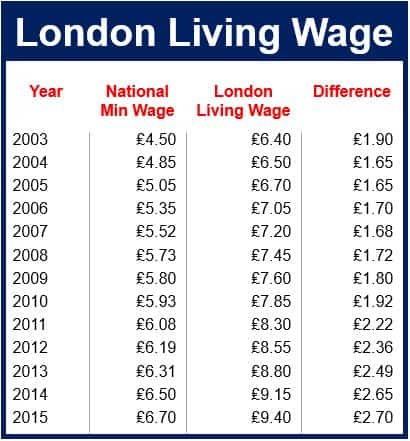 The difference between the London Living Wage and the National Minimum wage continues to widen. (Data Source: Living Wage Foundation)
The London Living Wage has increased by 40.3% since 2005. Over 30,000 employees across London have received a pay rise as a result of their employers’ Living Wage accreditation since 2011.
First major retailer commits to London Living Wage
The Mayor of London announced the good news while visiting the first major high street retailer to sign up to the initiative – an Oliver Bonas store at One New Change.
Mr. Johnson said:
“I am delighted that more than 700 employers have signed up to paying the London Living Wage and we now have tens of thousands of employees being properly rewarded for the work they do. As our economy continues to grow and employment in London increases, it is essential all hardworking Londoners receive a fair share of the proceeds of the capital’s success.”
“I have long argued that those companies that can afford to pay the London Living Wage should do so because there are clear benefits for employers in increasing productivity and reducing staff turnover, while it makes a real difference to the quality of life for employees.”
 Source: twitter.com/OliverBonas
Mayor wants more employers to sign up
Mr. Johnson is actively encouraging employers across London to sign up to the Living Wage Foundation’s accreditation scheme. Over the last 12 months, he has written to over 100 CEOs, mainly in the legal, retail and services provider sectors, as well as football (soccer) clubs and several FTSE 100 companies.
Research produced in 2015 by the Living Wage Foundation and the University of Strathclyde highlighted the benefits to employers that come from paying the Living Wage.
Not only does it boost staff wages, but can also reduce staff turnover and absenteeism, increase worker loyalty and morale, improve productivity and help enhance the reputation of the organisation.
Founder and Managing Director of Oliver Bonas, Oliver Tress, said:
“It makes complete sense to pay all our team at Oliver Bonas the London Living Wage. We want to pay a wage which both rewards our team for their hard work and loyalty and reflects the ‘real’ cost of living. We were the first retailer on the High Street to make this commitment and would encourage others to do so too.
Director at the Living Wage Foundation, Sarah Vero, said:
“Today’s announcement of the new, increased, London Living Wage rate brings a welcome pay rise to thousands of workers across the capital. Londoners are well aware that living costs in the capital have been rising faster than wages, and for many staff that are paid salaries close to the national minimums, life in this amazing city can be clouded by struggling from one pay day to the next.”
“London businesses are leading the way, with hundreds of employers voluntarily paying their people the London Living Wage. This independently calculated rate reflects the real cost of living in London. The difference between this rate and the new minimum wage premium for over 25s of £7.20 is stark. Hard working Londoners are the capital’s life blood, they need a wage that respects the contribution they make to this great city.”
Organisations wishing to become Living Wage Employers can find out more at this Living Wage Foundation web page.
According to a Markit study carried out on behalf of professional services company KPMG, about 5.84 million workers across the UK are paid less than the Living Wage this year.
Video – Peter Cooke talks about the Living Wage
Managing Director of CTS, Peter Cooke, describes how his childhood experiences shaped his commitment to the Living Wage.
