
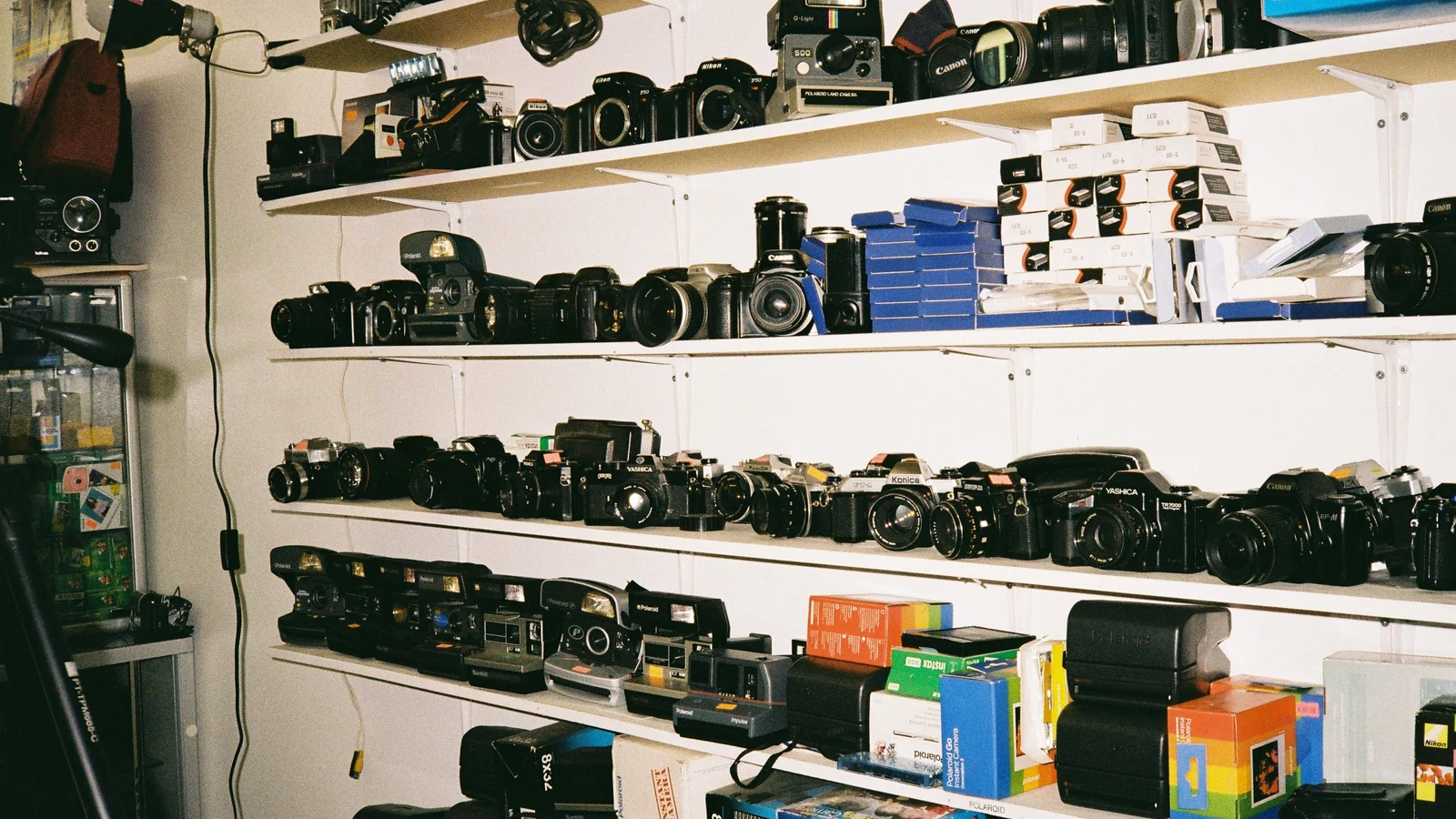
Products that shoppers investigate during the same online search can provide clues about which items compete with one another, according to research using historical data on digital cameras.
The approach could help businesses think beyond a product’s nearest-looking rival. Two items may have different features but still compete for the same customer’s attention.
The study also has a clear limit: a click is evidence of interest, not proof of a purchase or a direct measure of how sales would change after a price increase.
What researchers observed
Franz Hackl, Michael Hölzl-Leitner and Dieter Pennerstorfer analyzed search activity on an Austrian price-comparison site in a 2026 paper in Empirical Economics.
They examined activity from September through December 2012. After applying their selection criteria, their analysis covered 1,642 digital cameras. The historical dataset is useful for testing the method, but it does not describe today’s camera market.
The researchers compared several ways to measure how closely products were related, based on how frequently people clicked them during the same search episode. They then compared those measures with differences in product features and with prices.
Some search-based measures aligned more closely with observable product similarities than others. Cameras classified as having more close substitutes were also associated with lower prices in their models. The authors caution that the price relationship should not be interpreted as causal.
What co-search can and cannot reveal
Suppose a shopper looks at two cameras during one visit to a comparison site. Those products may be alternatives for the same purchase, even if one has a larger sensor and the other has a longer zoom.
When that pattern appears across many searches, it can help a business identify products worth comparing. A company might discover that customers consider a different brand, a cheaper model or a product with a different feature mix.
But people also click for reasons other than direct substitution. A shopper may be curious, compare products for different family members or open an item by mistake. Products that are rarely viewed together are not necessarily unrelated; the data may simply be too sparse to tell.
How a business might use the idea
A retailer can combine aggregated browsing patterns with product specifications, customer interviews and actual purchase data. If many shoppers compare two items, the retailer can check whether its descriptions clearly explain the differences that matter to customers.
For product teams, a comparison can reveal which features deserve investigation. It should not be used on its own to conclude that a particular feature caused customers to choose one item over another.
Our report on how search suggestions can help customers discover less familiar products examines a different use of search data. Neither study makes browsing history a substitute for a controlled sales test.
Why the platform matters
The site determines what is displayed and how products are ordered. Those choices can influence which items receive clicks and therefore which pairs appear related. Search sessions also have to be reconstructed from imperfect identifiers, which can combine or split users’ activity incorrectly.
Businesses using similar analysis should check the completeness of their catalog, the effect of ranking and the amount of available data. They should also follow applicable privacy requirements when collecting or analyzing browsing information.
The study offers a way to generate better questions about competition. Its observed price associations and historical camera data do not establish a universal pricing rule.
