
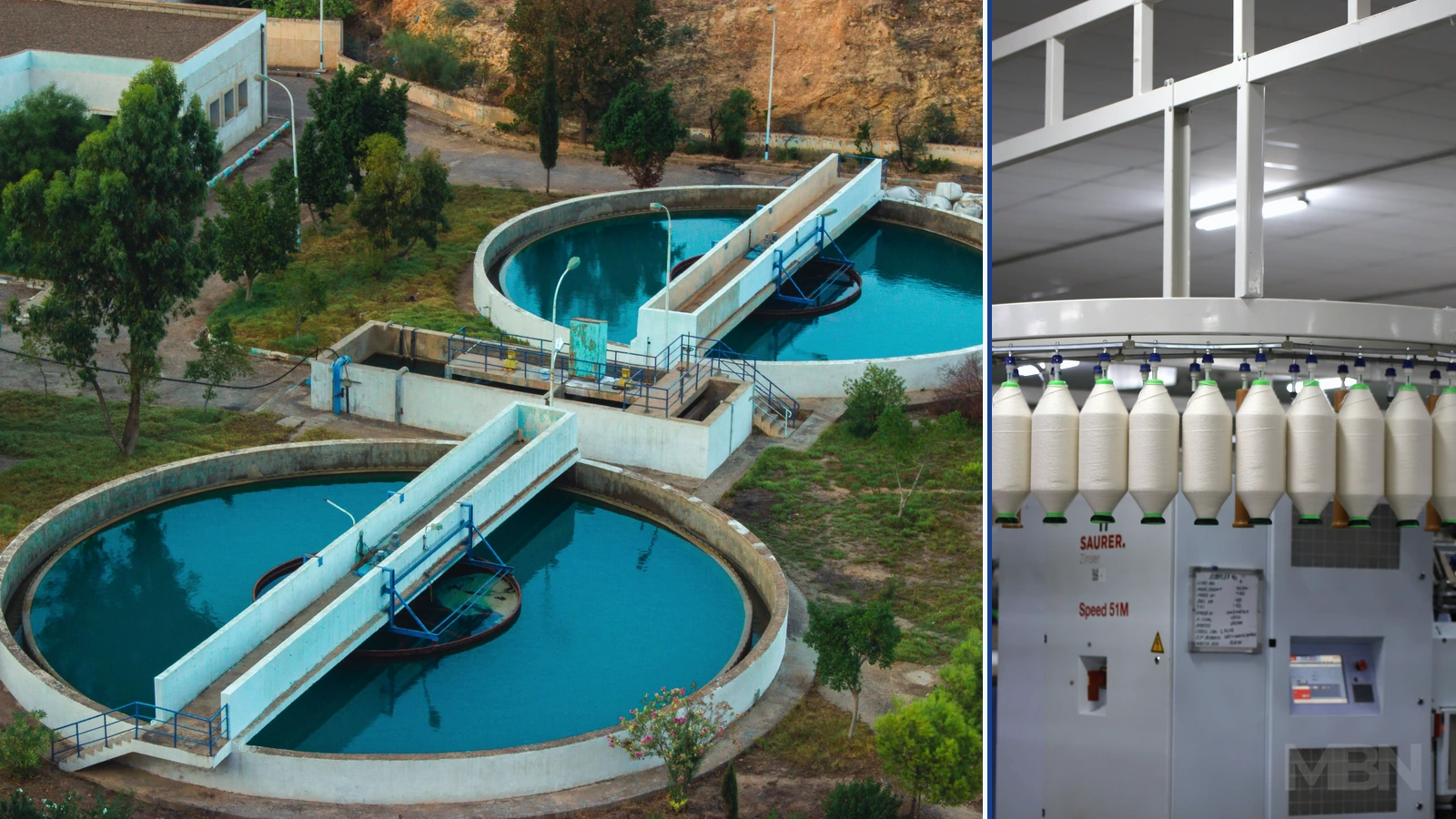
The World Bank Group estimates that expanding water reuse for industrial and drinking-water supplies could create up to $340 billion in investment opportunities by 2040. For factories, the decision depends on the cost of producing reliable water at the quality their processes require.
The estimate comes from its 2025 report, Scaling Water Reuse. It describes an opportunity dependent on investment and supportive policies, rather than money already committed or a forecast of equipment suppliers’ revenue.
Water reuse means treating previously used water so it can perform another job. A factory can recycle water within its own operations or buy treated supplies from a utility. Each arrangement has different costs for treatment, transport and maintenance.
A textile project shows how the funding works
A March 2026 World Bank-hosted account of a project at Fakir Knitwears in Bangladesh describes a $1.7 million investment to upgrade wastewater treatment and return water to production.
Of that total, $600,000 came from UNCTAD’s Sustainable Manufacturing and Environmental Pollution Programme, with the factory financing the remainder. UNCTAD is the United Nations trade and development body.
The authors, Primark’s Lewys Isaac and the 2030 Water Resources Group’s Michael Webster, report that the project returns more than 22% of the factory’s effluent, or used water leaving its processes, to production. Their organizations are involved in the wider initiative.
The example illustrates both the operating opportunity and the funding question. External support helped finance the installation, so its experience cannot establish what an unsubsidized project would earn at another factory.
The customer’s location changes the cost
The World Bank says reuse has its strongest business case when wastewater is available near the customer, particularly in cities and industrial parks. A treatment plant and a factory may look well matched on paper, but the connection between them also has to be built and operated.
Longer pipelines require more infrastructure, while pumping consumes electricity. Existing collection and treatment systems can make a nearby reuse project more attractive than one that must build everything from the beginning.
Supply reliability belongs in that comparison. Our recent reporting on El Niño’s implications for food, power and trade examines how rainfall shifts can affect businesses. The exposure differs by location; it does not mean every factory faces the same water shortage.
Water quality must match the job
The US Environmental Protection Agency’s industrial reuse guidance covers both purchased recycled water and water recovered from a site’s own processes. Uses range from manufacturing to cooling, with treatment needs depending on the source and destination.
Its guidance on financing reuse explains the principle of treating water for its intended purpose. Treating it beyond the quality a job requires can add avoidable expense and energy use.
Industrial water is not always a lower-grade product. Singapore’s water agency, PUB, says the biggest users of NEWater, its high-grade reclaimed water, are semiconductor wafer plants with quality requirements more stringent than those for drinking water.
NEWater undergoes filtration, reverse osmosis and ultraviolet disinfection. Reverse osmosis pushes water through membranes that separate it from dissolved contaminants. Industrial customers receive the water through a dedicated pipe network.
The separate checks on energy and water use discussed in our coverage of Singapore’s data-center cooling standard also apply here. Reusing water does not automatically reduce a facility’s electricity bill, and a recirculating system still needs suitable water quality.
Reliable customers help finance the equipment
The World Bank’s companion guidance identifies clear purchase agreements and arrangements for sharing risk as conditions that can attract private finance. A long-term customer gives a water supplier a firmer basis for estimating income from the treatment plant and pipes.
Low freshwater tariffs can weaken the incentive to invest, even where water resources are under pressure. The supplier also carries a commercial risk: for a reuse plant built around one large buyer, a factory shutdown would remove the customer expected to help repay the investment.

