

A 16-year study found that the 1989 Canada-US Free Trade Agreement (FTA), which lasted until the early 2000s, did not harm workers, despite a considerable increase in trade between the two nations.
Brian K. Kovak, professor of economics and public policy at Carnegie Mellon’s Heinz College, and Peter M. Morrow, associate professor of economics at the University of Toronto, wrote about their study and findings in the peer-reviewed journal The Review of Economic Studies (citation below).
Prof. Kovak said:
“The bilateral nature of the FTA allowed us to study the effects of both import competition and export expansion in response to a policy change. Our findings have practical implications: Canadian workers are less disrupted when Canada trades with the United States than when it trades with China.”
The two researchers used longitudinal administrative data from Statistics Canada from 1984 to 2004. They focused on what the effects of an increased export expansion and import competition might be on the Canadian labor market.
Professors Kovak and Morrow analyzed how workers’ careers evolved in industries affected by varying Canadian and U.S. tariff (import tax) changes under the Free Trade Agreement (FTA).
While Canadian tariff reductions had some negative impacts and U.S. tariff cuts had positive effects, these effects were minor and short-lived. Over time, workers adapted by finding new jobs in different companies, industries, or sectors, allowing them to regain lost earnings.
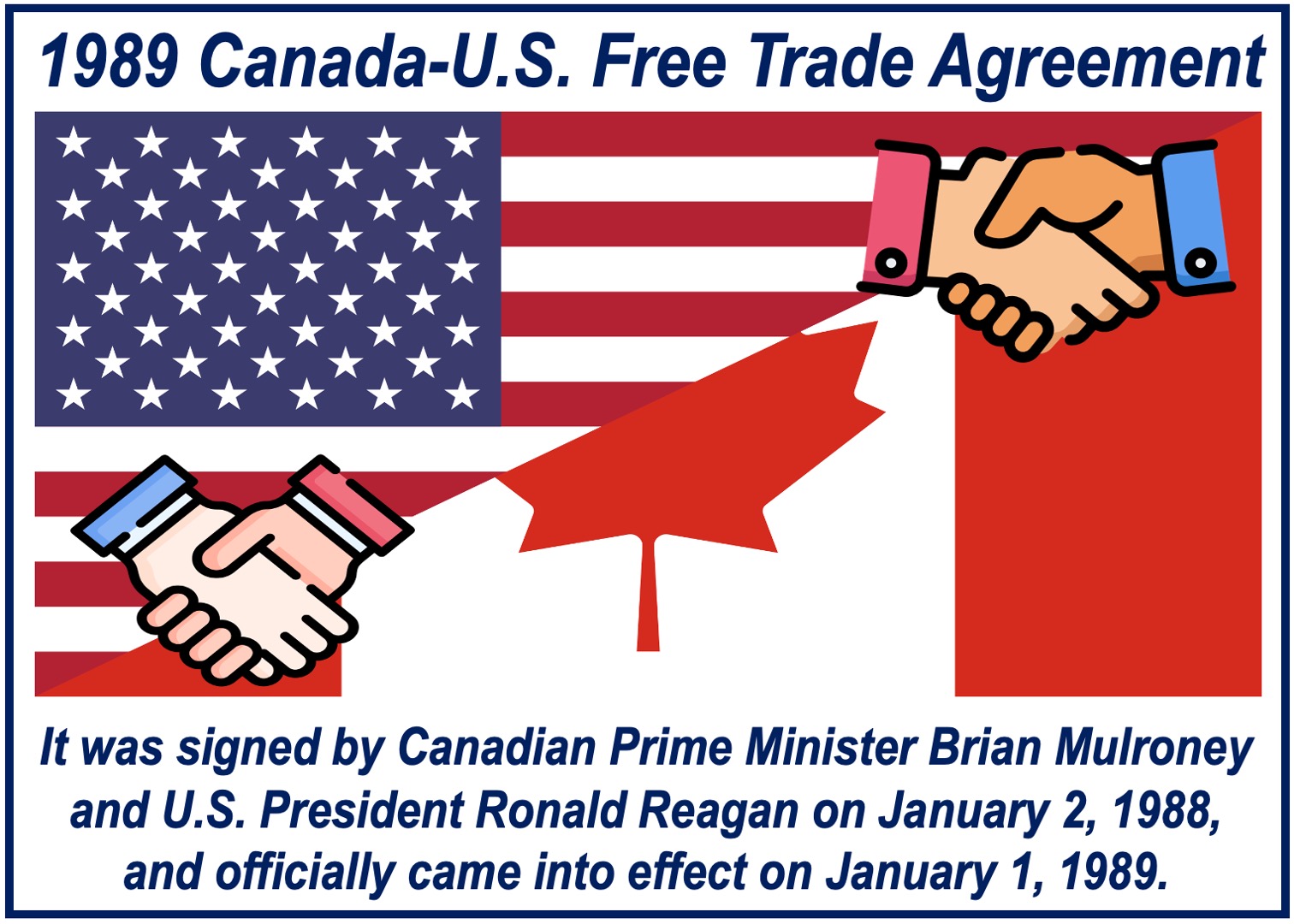
US-Canada Free Trade – Lowering Tariffs
When Canada lowered tariffs, workers’ total years worked during the sixteen years after the start of the FTA were not affected, nor were cumulative earnings.
Put simply, the tariff cuts played out as expected, but workers adapted quickly and managed to recover without long-term setbacks. The findings indicate that the two-way structure of the US-Canada Free Trade Agreement played a key role in helping workers transition smoothly to new opportunities.
Rather than triggering layoffs, Canadian tariff reductions slowed down employment growth largely by less hiring. This helped insulate existing workers.
These findings contrast sharply with most research on the *China Shock, which resulted in lower incomes and layoffs for both new and existing workers.
* The China Shock refers to the economic impact on industries and workers in countries with large manufacturing sectors, such as the US, Canada, Germany, and France after China joined the World Trade Organization in 2001.
Prof. Morrow said:
“Our findings are relatively optimistic and run counter to those of other studies. Canadian workers left affected industries quickly and transitioned to other manufacturing industries, construction, and services, and the bilateral nature of the FTA gave import-competing workers employment options in potential alternative manufacturing industries benefiting from larger U.S. tariff cuts.”
US-Canada Free Trade – a Timely Study
The findings of this latest study are timely because U.S. President Donald Trump, during his election campaign, claimed that free trade deals had harmed American workers. He stated that he would impose hefty tariffs on goods imported from Canada, Mexico, China, and even the European Union.
In an AP article, published on February 1, 2025, Josh Boak wrote:
“In Trump’s view, the 25% tariffs against the two North American allies and a 10% tax on imports from Washington’s chief economic rival are a way for the United States to throw around its financial heft to reshape the world.”
“Trump is honoring promises he made in the 2024 White House campaign that are at the core of his economic and national security philosophy.”
Many economists warn that protectionist measures such as raising tariffs tend to harm the economy by raising prices for consumers and businesses.
US Democratic lawmakers are trying to introduce legislation that would require Trump to obtain congressional approval before imposing higher tariffs. However, as both the House and Senate are controlled by Republicans, they are unlikely to get very far.
Citation
Kovak, B. K., & Morrow, P. M. (2024). The long-run labour market effects of the Canada-U.S. Free Trade Agreement. The Review of Economic Studies. https://doi.org/10.1093/restud/rdae113
