
A BCC survey found that investment and recruitment in the UK would be cut in the event of a ‘no Brexit deal.’ BCC stands for the British Chambers of Commerce. With only six months to go before Britain leaves the European Union, the BCC is calling for ministers to redouble their efforts. Reaching an agreement with the EU is crucial, says the BCC.
The UK must also have a transition period so that companies can prepare for change and prevent a severe slump in both recruitment and investment.
The BCC presses the need for precision and clarity. Businesses need to be able to plan for the future with a degree of confidence.
BCC Survey highlights
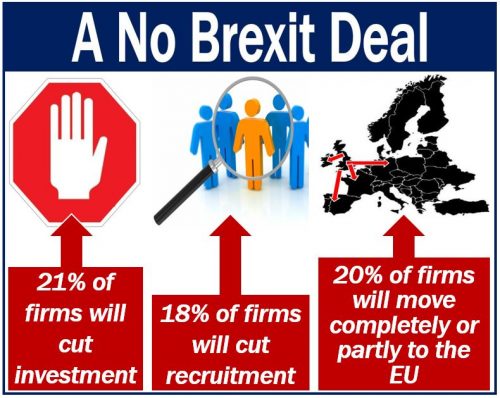
The BCC Survey reports that 21% of businesses will cut investment if there is no deal. One-fifth of all companies will move all or part of their business to the EU, while 18% will cut recruitment.
However, these figures drop significantly if the British government achieves a Brexit deal.
Most firms in Britain, sixty-two percent, have not completed a Brexit risk assessment.
No Brexit deal – real business consequences
A ‘no Brexit deal’ would affect large companies and those that are internationally active more than other businesses. Twenty-eight percent of companies with more than 50 workers say they would cut investment plans. Twenty-four percent of firms that export or import internationally also say they would cut investment plants.
Regarding a ‘no Brexit deal’ scenario, the British Chambers of Commerce says:
“The fact that one in five businesses (20%) say in a ‘no deal’ scenario they would move part or all of their business to the EU27 is an important wake-up call – both on the need to agree an orderly exit from the EU and on the need for the UK government to enhance incentives for investment.”
What is Brexit?
BREXIT stands for BRitain EXITing the European Union (EU). In 2016, there was a referendum in the UK in which Britons voted on whether to remain or leave the EU.
The electorate voted by a small majority – 51.9% to 48.1% – to leave. In other words, Britons voted for Brexit.
A Brexit deal – number one priority
Dr. Adam Marshall, Director General of the British Chambers of Commerce (BCC), said:
“Businesses are clear that reaching a deal with the EU, which addresses the future terms of trade and provides certainty, must be the government’s number one priority.”
“Our evidence is clear – failure to reach a political agreement would have real-world consequences, with significant decreases in both investment and recruitment. Larger firms and those active in international trade would suffer the most from a disorderly and sudden exit from the EU, but there will be impacts across the board.”
“Most concerning of all, a materially significant number of businesses are considering moving part or all of their operations to the EU in the event of ‘no deal.’ Government must act urgently and decisively to get a comprehensive deal done. They also need to use the levers they have, such as the upcoming Budget, to ensure they provide the right conditions for growth at home.”
‘No Brexit deal’ would be disastrous
Edward Winterton, UK Chief Executive of Bibby Financial Services, added:
“After more than two years of uncertainty, SMEs need answers over the future of the UK’s relationship with the EU. Specifically, they want clarity around the Customs Union, access to the Single Market and further detail on the practicalities of implementing this historic change.”
“The consequences of a ‘no deal’ outcome could be disastrous for the 5.7m SMEs in the UK – particularly for those buying and selling goods within the EU.”
