
hydrogen-fuel-cell-powered-bmw

BMW unveils hydrogen-powered 5 series

Written by Joseph Nordqvist

Published: 02:09, July 5, 2015

BMW is set on expanding its portfolio of clean-vehicle offerings with the addition of cars that run on hydrogen fuel.

Hydrogen fuel cells do not generate carbon dioxide when burnt. In fact, water is the only product formed when hydrogen burns.

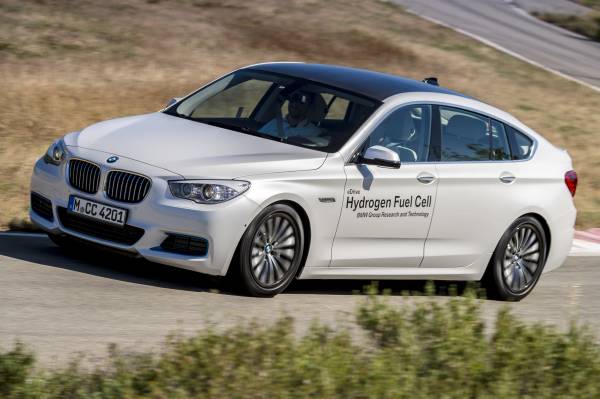
At its “Innovation Day” in France the German automotive giant unveiled a prototype 5 Series GT that uses a hydrogen fuel to power its electric motor.

BMW is working on fuel cell technology with the help of Japanese partner Toyota – the aim of the collaboration is to have an initial group of approved components ready by 2020.
hydrogen-fuel-cell-powered-bmw

The hydrogen-powered 5 Series prototype can drive for over 300 miles on hydrogen. The car features hydrogen storage in the form of a tunnel tank between the front and rear axle.

Hydrogen fuel cell drive system is a future-focused variant of BMW eDrive technology allowing all-electric driving with a high operating range and short refueling times.

Matthias Klietz, head of power-train research, said that BMW plans “a technically mature, customer-ready vehicle some time after 2020,”

“By around 2025 to 2030, we expect fuel cell cars to have an established presence, but there are challenges that remain, like building the refueling infrastructure,” he added.

According to BMW:

“Our aim is to establish hydrogen fuel cell drive technology as an integral element of the BMW Group’s Efficient Dynamics strategy for the long term.”

The disadvantages associated with hydrogen-cars is that there are few filling stations that sell hydrogen, the fact that hydrogen fuel cells do not work at very low temperatures, and the high costs associated with compressing and liquefying hydrogen.

Initially hydrogen powered cars are going to be very expensive, but there is a growing market of people looking for cars that are environmentally friendly. Using this technology is an important step in producing safe emission-free vehicles.

Joseph Nordqvist Avatar

Other News

In-store returns did not guarantee higher online sales in a retail study

Nov 24, 2026

Data centers had different effects on industrial and household power prices in a US study

Nov 24, 2026

Why changing jobs does not always lead to better pay

Nov 24, 2026

Worker interviews uncover job tasks missing from standard occupation lists

Nov 24, 2026

Startup training was followed by more closures and stronger funding results in a US experiment

Nov 24, 2026

Information about local rivals changed firms’ AI investment plans in a European study

Nov 24, 2026

Online job ads can understate small employers’ share of hiring opportunities

Nov 24, 2026

How IBM expanded marketing experiments by changing who could run them

Nov 24, 2026

Grocery discounts do not lift every brand’s sales equally, study finds

Nov 24, 2026

A low upfront price can obscure the cost of refills, study finds

Nov 24, 2026

How medical device startups describe their products may affect clearance times

Nov 23, 2026

Why cheaper grocery products can face faster inflation when costs rise

Nov 23, 2026

One office day a month was followed by more calls handled in a remote-work experiment

Nov 23, 2026

An AI shopping assistant increased sales in a livestream experiment

Nov 23, 2026

Starting an idea without AI changed employees’ sense of ownership in an H&M test

Nov 23, 2026

Showing the extra cost of a larger pack changed buying choices in an online test

Nov 23, 2026

Looking at products together can help identify competitors, camera study finds

Nov 23, 2026

Removing unauthorized book copies produced an uncertain sales result in a field experiment

Nov 23, 2026

Warnings did not consistently undo the influence of product lineups

Nov 23, 2026

Demographic ad targeting can change how fairly consumers view a brand

Nov 22, 2026