
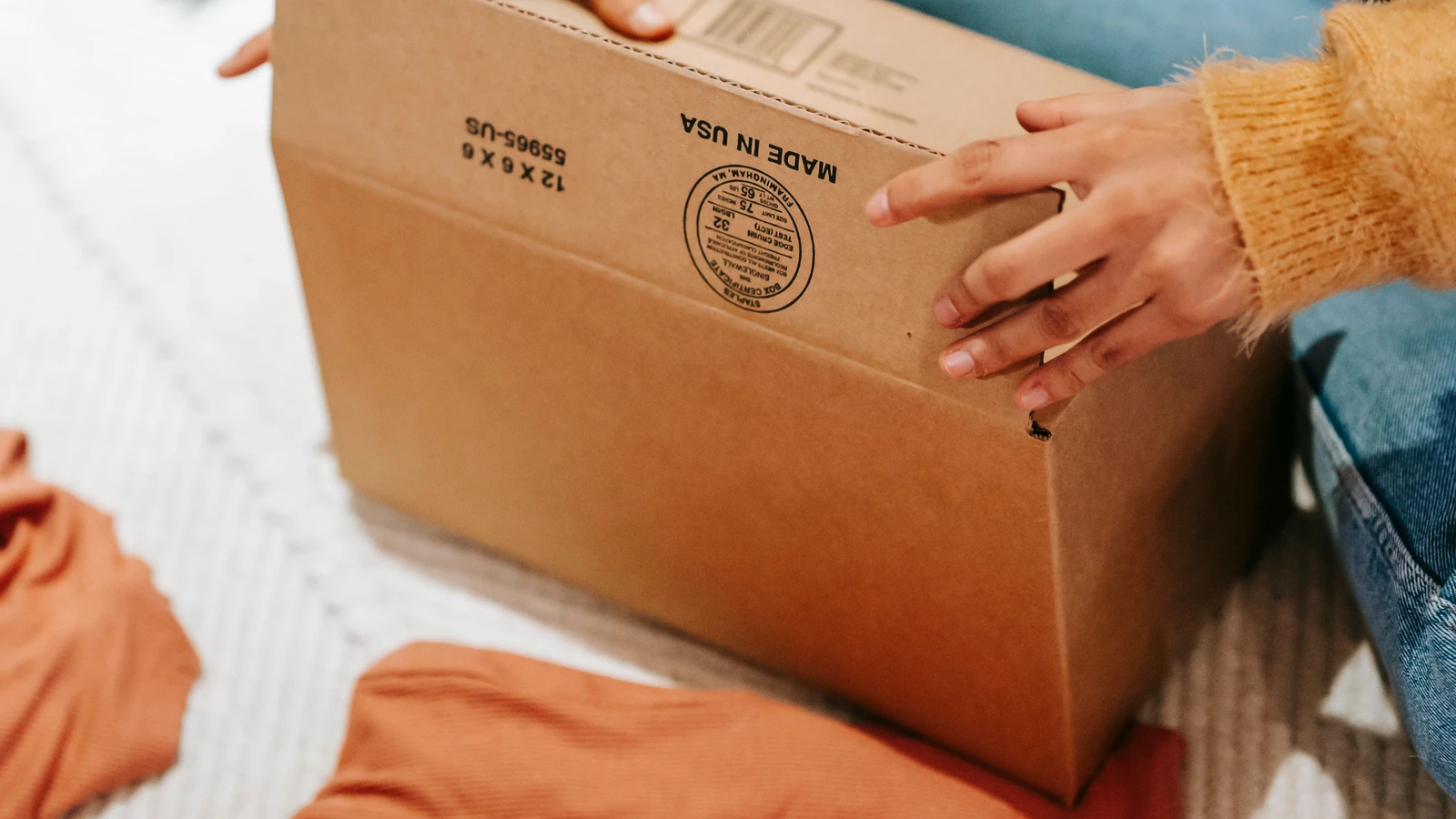
A refund is only one part of the cost of a returned order. A seller may also pay for shipping, inspection and repackaging, while the product itself may lose value or become impossible to resell.
Those costs can determine whether a product, promotion or sales channel earns enough to justify the resources devoted to it. A clear return policy also gives customers confidence to buy, so the goal is to measure the trade-off before changing it.
Follow the money and the product
Begin with the amount the customer paid and the amount refunded. Record any original delivery cost the seller cannot recover, the return label, payment fees retained by the processor and the time spent handling the case.
Next, examine what happens to the item. A saleable return may go back into inventory after inspection. A damaged or obsolete product might be sold at a discount, sent for repair, donated or discarded. Our earlier coverage of what happens after a product is returned follows those different routes.
Avoid counting the product’s full purchase cost as a loss if the item remains saleable at its original value. Equally, a full-price inventory entry can overstate recovery if the item can be sold only at a discount.
Work through one returned order
Imagine a customer pays $100 for an item that cost the seller $40. The seller refunds the full $100 and cannot recover $7 of outbound shipping. The return label costs $8, inspection and repackaging cost $5, and $3 in payment fees are retained. The item is damaged and can be sold for only $20 in its current condition, with no further selling costs assumed.
For this example, the seller has spent $63 on the item and transaction costs: $40 plus $7, $8, $5 and $3. The $100 sale and $100 refund cancel each other. The $20 resale recovery reduces the remaining cost to $43. If the item could be resold for its full $40 cost, the remaining cost would be $23 under the same assumptions.
This is a simplified cash-and-cost illustration, not a substitute for accounting treatment. The recovery value should reflect any further selling fees or repair costs, and the numbers should be recorded in the appropriate period.
Look beyond the average return rate
Calculate the proportion of shipped items returned for a defined group of orders after allowing time for returns to arrive. Compare products, sizes, suppliers and channels. A low overall rate can hide one product with frequent defects or a size guide that creates avoidable confusion.
Combine the rate with the average net cost per returned unit. A product with fewer but expensive returns can be more costly than one with many inexpensive returns. Include partial refunds, exchanges and returns still in transit, and avoid treating a recent cohort as complete while its return window is open.
Fix the reason without making returns hard
Examine customer explanations alongside warehouse inspection results. Better product measurements, clearer photographs, stronger packaging or a supplier correction may reduce avoidable returns without restricting legitimate customer rights.
Compare any policy change with customer satisfaction, repeat purchases and sales as well as handling cost. The US Federal Trade Commission’s online-shopping guidance identifies questions shoppers should be able to answer, including who pays return shipping and whether restocking fees apply. Requirements vary by jurisdiction and product, so check the rules where customers are served.
Review the numbers by order cohort and product. A return policy can be a cost worth bearing, but the business needs to know where that cost arises before deciding how to control it.
