
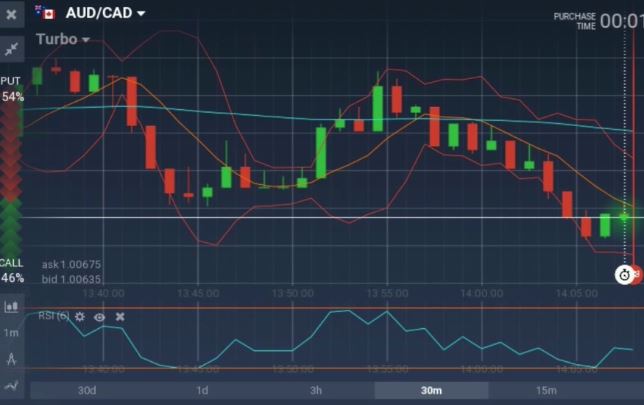
The European Financial Supervisory Authority has announced that it will extend a temporary ban on speculative products known to retailers as “binary options”. This has actually shocked a lot of investors, and it was assumed that the move was not the final step. After all, they work in a similar way to other derivatives on the market. Obviously the operators do not have such a good lobby here and are not quite so well networked in Brussels. So we have to consider how all this is going to fit together.
All about binary options
Let us first briefly explain the subject of binary options, because most readers will only have a slight foreboding of what this is all about. The binary options are a very speculative instrument with which investors can speculate on a certain direction of a currency or an index. This explanation is also very important because there are several classes of binary options.
So there is no single class that you can put in a wheelbarrow like that. Nevertheless, there are uniform explanations that can be said about the general picture of binary options. Basically there are no differences here either. So binary options are very easy to understand, which makes them a popular choice for low-skilled traders. With this experiences you are in any case a big step further: https://www.asktraders.com/de/.
Most commonly traded
The most commonly traded instrument is an option where you can easily trade in certain directions.
It also gives you access to stocks, indices, commodities and currencies. These options have a clear expiration date, a time frame and an exercise price. If a trader correctly bets on the direction and price of the market at the time of expiration, he gets a fixed return. This is also independent of how much the instrument has moved since the transaction. The problem, however, is rather that a wrong bet in the wrong direction also erases the original investment with zero. This also means that you will lose all your stakes.
That’s what makes Bitcoin so perishable and dangerous. The binary options trader buys a call if he bets on different pairings. He can, for example, bet on stocks or an Indes. It is also possible to bet on commodity or currency pairs. You can be bullish here and bet on rising prices or just bet on falling prices and be there with money and also earn money if you should be right.
To make a profit
In order to earn money, the market must be traded above the strike price at the expiration time. To earn money, the market must be traded below the strike price at the time of expiration.
The strike price, expiration date, payout and risk are specified by the broker when the transaction is first concluded.
For most binary options traded outside the US, the strike price is the current price or price of the underlying financial product. Therefore, the trader bets on whether the price on the expiration date is higher or lower than the current price.
This is exactly what makes binary options so dangerous. They can practically not simply hold an option. So you can’t decide whether the price will level off at your desired level tomorrow or a month from now. They are de facto also very strongly temporally bound and can therefore only surrender to the variant of chance. There are therefore also very different variants.
US and European binary options
The binary option traded in the US and the options traded in Europe are particularly important. Non-US binary options typically have a fixed payout and a fixed risk and are offered by individual brokers rather than directly on an exchange. These brokers benefit from the difference between what they pay out on profitable trades and what they collect on loss-making trades.
While there are exceptions, these instruments should always be able to hold a final result in a payout structure until maturity. This means that you will either earn or lose all or nothing with the trade.
