
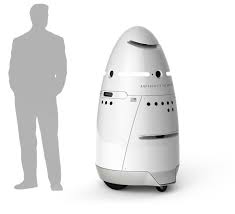
Microsoft testing K5 robot security guards by Knightscope

Written by Joseph Nordqvist

Published: 22:38, November 22, 2014

Microsoft is testing out the “K5” robot security guards that can move autonomously and are equipped with advanced cameras and sirens and alarms that chime off when there are signs of trouble.

The K5 robots, developed by Knightscope, are 5 feet tall and weigh 300 pounds. The machines can read license plates, share live videos it records, track and analyze human faces, and monitor the activity of other nearby K5 robots.

Although the robot won’t be able to chase criminals it can instantly report a problem to authorities and provide important data, such as a video of the incident.

Stacy Stephens, Knightscope’s co-founder and vice president of sales and marketing, told the MIT Tech Review that K5 robots have been created to work alongside human security guards and not replace them.

The robots are capable of doing mundane security detail, which allows their human counterparts to focus on strategic operations.

K5 robot

Stephens said:

“I believe robots are the perfect tools to handle the monotonous and sometimes dangerous work in order to free up humans to more judiciously address activities requiring higher-level thinking, hands-on encounters, or tactical planning.”

The K5 robot can run for a full day with a single battery charge – which only takes 20 minutes to recharge.

The company is primarily set on focusing on businesses, but could move into actually working in law enforcement.

Joseph Nordqvist Avatar

Other News

In-store returns did not guarantee higher online sales in a retail study

Nov 24, 2026

Data centers had different effects on industrial and household power prices in a US study

Nov 24, 2026

Why changing jobs does not always lead to better pay

Nov 24, 2026

Worker interviews uncover job tasks missing from standard occupation lists

Nov 24, 2026

Startup training was followed by more closures and stronger funding results in a US experiment

Nov 24, 2026

Information about local rivals changed firms’ AI investment plans in a European study

Nov 24, 2026

Online job ads can understate small employers’ share of hiring opportunities

Nov 24, 2026

How IBM expanded marketing experiments by changing who could run them

Nov 24, 2026

Grocery discounts do not lift every brand’s sales equally, study finds

Nov 24, 2026

A low upfront price can obscure the cost of refills, study finds

Nov 24, 2026

How medical device startups describe their products may affect clearance times

Nov 23, 2026

Why cheaper grocery products can face faster inflation when costs rise

Nov 23, 2026

One office day a month was followed by more calls handled in a remote-work experiment

Nov 23, 2026

An AI shopping assistant increased sales in a livestream experiment

Nov 23, 2026

Starting an idea without AI changed employees’ sense of ownership in an H&M test

Nov 23, 2026

Showing the extra cost of a larger pack changed buying choices in an online test

Nov 23, 2026

Looking at products together can help identify competitors, camera study finds

Nov 23, 2026

Removing unauthorized book copies produced an uncertain sales result in a field experiment

Nov 23, 2026

Warnings did not consistently undo the influence of product lineups

Nov 23, 2026

Demographic ad targeting can change how fairly consumers view a brand

Nov 22, 2026